If social media already brings you followers, do you really need an email list? For a service business, the honest answer is yes, but not for the reason most list building advice gives.
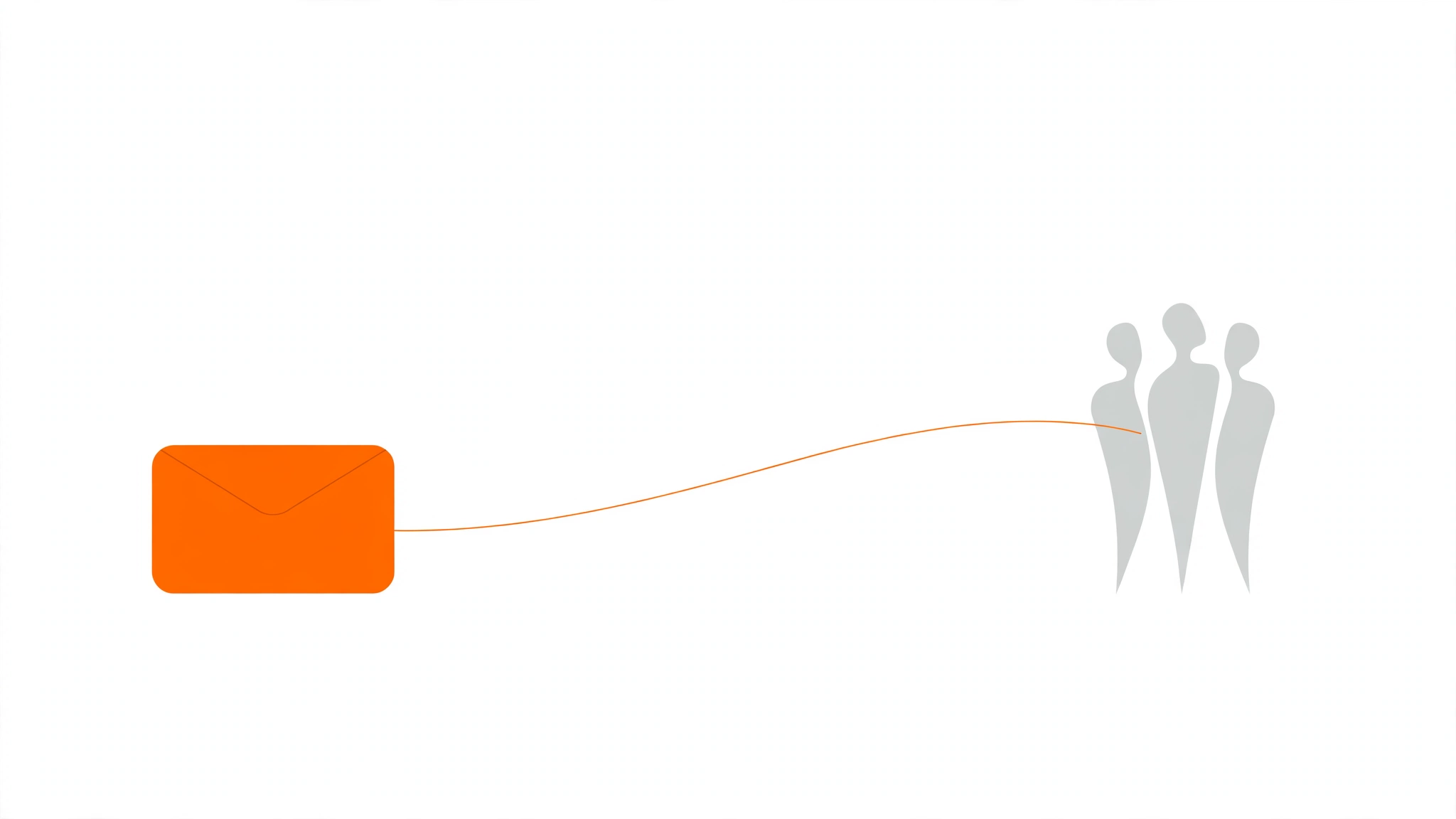
You do not need a list to replace social media. You need it for the moment social media cannot cover: the day you have something time sensitive to say, and the feed does not show it to the people who already chose to follow you.
Social media is where strangers meet you. An email list is where they choose to hear from you again. That difference matters more than follower count, because only one of those connections stays in your control when a platform changes its rules.
Why does a social following feel bigger than it is?
A follower count looks like an audience. In practice, it is a permission to compete for attention, not a promise of reach.
Every post still has to earn its place in a feed. A platform can change what it favours, favour a different format, or show your post hours after the moment it mattered. Your content can be good and still arrive late. That is not a personal failure. It is how a feed works.
This is why a strong post can get likes and still bring no inquiries. Likes show that people who saw the post approved of it. They do not show that everyone who follows you saw it, remembered it, or knew what to do next. Earlier articles on this blog look at that gap from two angles: why Instagram reach stalls even when likes look fine, and why LinkedIn posts get likes but no clients.
A list changes the starting point. When someone gives you an email address, they are not just reacting to one post. They are saying, in a small but deliberate way, that they want the next message too. That is a stronger signal than a follow, and it deserves a clearer follow up. The same discovery point applies to video: it helps to understand how short videos get found when a buyer types a question, rather than only scrolling a feed.
What does an owned list give you that a feed does not?
First, timing. You choose when a message goes out. A workshop date, a booking window, or a useful guide does not have to wait for the feed to notice it.
Second, continuity. A feed moves on. An inbox keeps a thread. A subscriber can open your message later, reply to it, and find it again when they are ready to talk. That suits high trust services, where buyers rarely decide in one scroll.
Third, a record you can move. With a reputable email tool, you should be able to export your subscriber list. If you change tools, the list should travel with you. You cannot say the same about a follower list on a social platform. Check export before you commit to a tool, not after your list grows.
None of this makes email perfect. Messages can land in a promotions folder. People can ignore them. People can unsubscribe, and that is their right. A list is not a guarantee of attention. It is a direct channel you control, with permission, instead of a rented slot in someone else's feed.
What should you offer in exchange for an email address?
"Join my newsletter" is not a reason. It is a request. Most people scroll past it because it tells them nothing about what they will get, or why it is worth an inbox slot.
Give one specific reason, tied to what you already sell. For a service business, the strongest offers are usually practical and short:
- A checklist that solves one small problem before a call, such as questions to ask before hiring a coach, or a pre launch content checklist.
- A short guide that finishes a job your post started, for example the full version of a tip you shared in a video.
- Early access to a booking window, a workshop, or a limited number of consultation slots.
- A regular note with one useful idea, sent on a schedule you actually keep.
Pick the lowest effort offer that still feels worth an email address. You can test a second offer later. What you cannot do is promise a weekly guide and then send nothing for three months. The offer sets an expectation. Your first few emails either confirm it or break it.
One caution: do not buy a list, borrow a list, or add people who never asked to hear from you. A small list of people who chose you will teach you far more than a large list of strangers who mark you as spam. Permission is not a legal footnote here. It is what keeps the channel usable.
How do you move followers to your list without pushing too hard?
You do not need to turn every post into a sign-up pitch. You need a clear path, placed where people already look, and mentioned with a reason.
Start with one sign-up page, not your homepage. A homepage gives a visitor ten choices. A sign-up page does one job: it repeats the offer from your post, asks for an email address and a first name at most, and says how often you will write. If the post promised a checklist, the page should say exactly that. If it promised one email a month, say so.
Put the link where followers already look: your bio, a pinned post, and the captions of videos that relate to the offer. Then mention the list in your regular posts, but only with a reason. A simple rhythm works for most service businesses: give a useful tip in public, then point to the fuller version by email. Constant Contact's guide to growing an email list on social media uses the same shape: one sign-up page, a clear reason to join, and a welcome email sent right away.
A practical example helps. A leadership coach posts a short video on three questions to ask before a difficult conversation. The video ends with one line: the full conversation checklist goes out by email this week, and the link is in the bio. The post still helps people who never sign up. The list simply gives the fuller version to people who want it.
Do not hide the link behind three menus, and do not ask for a phone number, a birthday, and a company size on day one. Every extra field is a reason to leave. You can learn more about a subscriber later, in a conversation, when it actually matters.
What should you send once someone joins?
Send the welcome email right away, while the person still remembers signing up. Keep it short. Deliver what you promised at the top, repeat how often you will write, and make it easy to leave. A clear unsubscribe link is not a weakness. It keeps your list full of people who want to be there.
After that, keep the same standard as your best posts. One useful idea, in plain language, with one clear next step. That next step might be a reply, a booking page, or a related article. It should not be five different links competing for attention.
A simple monthly rhythm is enough for many coaches and consultants: one practical note, one real example from your work, and one low pressure invitation to talk. If you have nothing useful to say that month, it is better to send a short, honest note than a long filler email. People stay on lists that respect their time.
How do you know if your list is working?
Judge the list against its own history, not against someone else's benchmark. Your audience, your offer, and your price are different, so a borrowed conversion rate will mislead you.
Each week, check three things, using your own numbers:
- New sign-ups by platform and post. Which post actually sent people to the page?
- Sign-ups divided by page visits. If many people visit but few sign up, the offer or the page headline is probably unclear, not the audience.
- What happened after the welcome email. Did new subscribers reply, click, or book a call? Did many leave within the first few weeks? Early unsubscribes often mean the offer attracted the wrong people, or the first email did not match the promise.
Once a month, look at the bigger picture. Which offer brought in the most subscribers who stayed? Which email led to real conversations? Change one thing at a time, a headline, an offer, or a posting rhythm, and compare before and after. That is the same discipline as reading social numbers that actually point to clients, applied to a channel you control.
What should you avoid?
Three mistakes quietly kill most lists.
First, announcing the list once and never mentioning it again. A link in your bio helps no one if no post ever points to it.
Second, treating every subscriber like a buyer on day one. A welcome email that jumps straight to a sales pitch breaks the trust that made someone sign up. Teach first, invite second.
Third, letting the list go silent for months and then returning with an urgent offer. Silence followed by pressure reads as opportunistic, even if you did not mean it that way. A steady, useful rhythm matters more than a dramatic launch.
A simple place to start this week
You do not need a new platform, a funnel, or a week of setup. You need one decision and one page.
Choose the platform where your buyers already comment and ask questions. Choose one offer that finishes a job your content already starts. Build one short sign-up page that repeats that offer. Put the link in your bio and in one pinned post. Then, in your next useful post, mention the list once, with the reason, and send the welcome email the moment someone joins.
Social media will keep doing the job it does best: helping strangers discover you. A list does the quieter job that turns discovery into a relationship: it lets you reach the people who already said yes, at the moment it matters, without asking a feed for permission first. This list step fits inside a wider Content-to-Client system, where public attention is turned into private conversations.
If you want help turning that system into a clear plan, with positioning, content pillars, and platform priorities that fit your service, the next step is to look at Social Media Strategy, where that work starts with strategy before the posting schedule.